Mayor: Lesson Plan
About This Lesson
A Lesson on Palestinian Culture & Resistance
“Make space for joy until we get freedom and independence.”
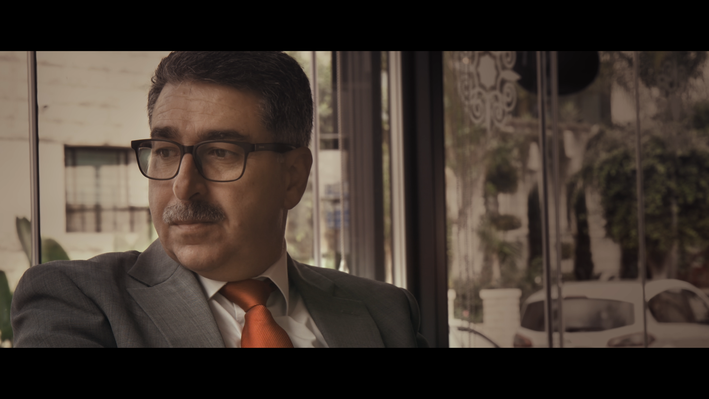
Mayor Musa tells the crowd gathered in the city of Ramallah to watch the lighting of the Christmas tree. These words standout amidst the backdrop of resistance and violence as Palestinians from Ramallah push back against the occupation of their land and the annexation of Jerusalem as Israel’s capital. Thus the crux of David Osit’s film highlights and decimates a variety of juxtapositions created by Western media. Palestinians are shown as multifaceted full beings within a modern city. Yet, the occupation still looms large and soon enough, though we think we’re watching a film about how difficult it is to be a civil servant, what we get is so much more. The film maker beautifully captures how hard it is for Mayor Musa to run a city while under occupation. More importantly, the viewer comes to understand that though Palestinians must and do resist, there’s also a place for joy and hope. And perhaps, it’s actually that joy and hope that keeps them going another day. This lesson will help students develop an understanding of the history of Palestine, its culture, and religions through critical analysis of the occupation from the view of the Mayor of Ramallah and its people.
In these series of lessons, students learn new vocabulary terms relating to Israeli occupation of Palestine. They’re asked to build upon prior knowledge of the occupation of Palestine utilizing a K-W-L chart. In addition, they will engage in various methods of learning like Venn Diagrams as they compare and contrast Christmas lighting events in Palestine and the U.S. as well as Palestinian and Black Lives Matter protests. Throughout the lessons, there is robust space for student voice as they grapple with in-text and higher order thinking questions. Students will also participate in a debate around the issue of resistance and what it looks like. Learning will be tracked with the use of pre and post knowledge checks utilizing google forms. The lessons can be easily modified and adapted depending on your student needs. However, the use of multimodal activities within these lessons addresses some of the learning challenges that some students may face. Students should walk away from this lesson with a more nuanced view of the occupation of Palestine while building analysis, comprehension, and debate skills.
A Note from Curriculum Creator, Keziah Ridgeway
I would describe myself as an Abolitionist Educator. This term was coined by Dr. Bettina Love in the book “We Want to Do More Than Survive: Abolitionist Teaching and the Pursuit of Educational Freedom”. An abolitionist educator teaches from a decolonized lens while providing students with multiple ways to access learning. An abolitionist educator also doesn’t shy away from topics that many people are afraid to touch just because it’s a sensitive matter. I believe that learning history is supposed to make us all uncomfortable. It’s in that discomfort that we find new ways to move forward, find solutions and heal. With this outlook, I felt compelled to create this lesson for the documentary as a way to help teachers provide a different view of the occupation of Palestine. Many times, Palestinians are viewed as either victims or extremists and I wanted this lesson, like the film itself, to spotlight their multifaceted identity and humanity. This film will touch on several issues around resistance, protest, local governance and the Palestinian identity.
A Note to Teachers
Teaching about Palestine from a Palestinian lens can be a very controversial thing to do in many schools. However, all students should have the opportunity to see themselves in their classrooms and have their humanity recognized. The vocabulary utilized within this lesson was chosen for a specific reason but many non-Palestinians may take issue with it. Teachers should utilize their discretion when deciding if these lessons are suitable for their classroom. It might also be a great idea to share the lessons with administrators
Sources
Authored by:
